Showing posts with label useful tips. Show all posts

Thursday, August 22, 2013

16 simple ways to reduce plastic waste

Plastic is found in virtually everything these days. Your food and hygiene products are packaged in it. Your car, phone and computer are made from it. And you might even chew on it daily in the form of gum. While most plastics are touted as recyclable, the reality is that they're “downcycled.” A plastic milk carton can never be recycled into another carton — it can be made into a lower-quality item like plastic lumber, which can’t be recycled.

The plastic waste ends up in landfills, beaches, rivers and oceans and contributes to such devastating problems as the Great Pacific Ocean Garbage Patch, a swirling vortex of garbage the size of a continent where plastic outnumbers plankton. Plus, most plastic is made from oil. Luckily, there are simple steps you can take that will dramatically decrease the amount of plastic waste you generate.

Just say no to straws


  One of the easiest ways to keep plastic out of the landfill is to REFUSE PLASTIC STRAWS. Simply inform your waiter or waitress that you don't need one, and make sure to specify this when ordering at a drive-thru. Can't fathom giving up the convenience of straws? Purchase a reusable stainless steel or glass drinking straw. Restaurants are less likely to bring you a plastic one if they see that you've brought your own.


                                                                        Reusable produce bags


      About 1 MILLION plastic bags are used EVERY MINUTE, and a single plastic bag can take 1,000 years to degrade (http://www.reuseit.com/learn-more/top-facts/plastic-bag-facts). If you're already bringing reusable bags to the grocery store, you're on the right track, but if you're still using plastic produce bags, it's time to make a change. Purchase some reusable produce bags and help keep even more plastic out of the landfill. However, avoid those bags made from nylon or polyester because they're also made from plastic. Opt for cotton ones instead.


 Give up gum


   Gum was originally made from tree sap called chicle, a natural rubber, but when scientists created synthetic rubber, polyethylene and polyvinyl acetate began to replace the natural rubber in most gum. Not only are you chewing on plastic, but you may also be CHEWING ON TOXIC PLASTIC — polyvinyl acetate is manufactured usingvinyl acetate, a chemical shown to cause tumors in lab  rats (http://www.theecologist.org/green_green_living/behind_the_label/396637/behind_the_label_chewing_gum.html). While it is possible to recycle your gum, it may be best to skip it — and its plastic packaging — altogether.

Buy boxes, not bottles


   BUY laundry DETERGENT and dish SOAP IN BOXES instead of  plastic bottles. Cardboard can be more easily recycled and made into more products than plastic.
                     
                                                                                                            Buy from bulk bins


   Many stores sell bulk food like rice, pasta, beans, nuts, cereal and granola, and opting to fill a reusable bag or CONTAINER with these items will save both money and unnecessary packaging. Stores have various methods for deducting the container weight so simply check with customer service before filling your container. Also, many cotton bags have their weights printed on their tags so they can simply be deducted at the checkout.


Reuse containers


  You can buy a variety of prepared foods in GLASS JARS instead of plastic ones, including spaghetti sauce, peanut butter, salsa and applesauce, just to name a few. Instead of throwing these away or recycling them, reuse the jars to store food or take them with you when you’re buying bulk foods. If you have plastic containers leftover from yogurt, butter or other food, don’t throw them out. Simply wash them and use them to store food.


Clean green


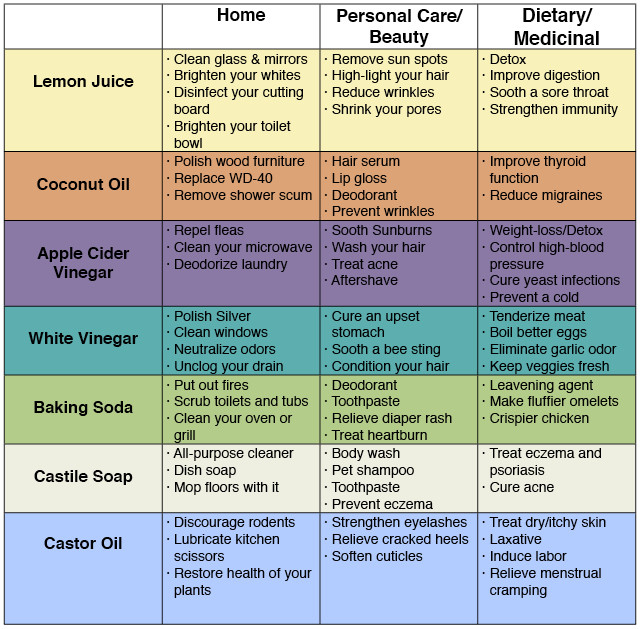
  There's no need for multiple plastic bottles of tile cleaner, toilet cleaner and window cleaner if you have a few basics on hand like BAKING SODA or VINEGAR. So free up some space, save some cash, and avoid those toxic chemicals by making your own cleaning products.


      Pack a greener lunch


   If your LUNCHBOX is full of disposable plastic containers and sandwich bags, it's time to make a change for the greener. Instead of packing snacks and sandwiches in bags, put them in reusable containers you have at home, or try lunch accessories. You can also opt for fresh fruit instead of single-serving fruit cups, and buy items like yogurt and pudding in bulk and simply put a portion in a reusable dish for lunch.


posted by Igor

Monday, August 5, 2013

Home-made Coconut Oil Deodorant

Have you ever tried to make your own home-made deo? 
What about trying this one?
Homemade Deodorant
¼ cup expeller-pressed coconut oil
¼ cup shea butter
¼ cup baking soda
¼ cup cornstarch or arrowroot powder
10 drops essential oil of your choice, optional
Over medium-low heat, melt the coconut oil and shea butter together and whisk in the remaining ingredients until smooth and uniform. Cool slightly and whisk in the essential oil of your choice, if desired.
Pour into a wide-mouthed container or a clean and empty deodorant container and smooth the top. Allow to cool in the fridge until solid before use. In the summer, store it in the fridge if your house stays so warm that the coconut oil won’t stay solid.
Source and more recommendation: healthimpactnews.com 

Friday, May 17, 2013

Bike to work day

Today is the bike to work international day. Have you noticed it?


        Bike to Work Day is a recognized event celebrated annually on the third Friday in May.
 Bike to Work 2013 supports bicycling as a viable, environmentally friendly, cost saving commute choice.                                     Enjoy your bike trip today:) 

Eva


Monday, May 6, 2013

Travelling and sustainability

Travelling is a fundamental source of experiences that enrich our lives. I love travelling and many of you probably feel the same way. The season of summer holiday, changing places and knowing new cultures is coming on. Therefore I decided to collect some information about travelling and what should we consider as important to be more environmentally aware while travelling.


Travelling has a deep influence on the environment and on people. There are many factors which play a role while travelling: the means of transportation, the destination, our behaviors,  the length and the reason for the trip. Every trip leaves a certain footprint in the environment and in the places we visit. As a first step It is important to become aware of this fact.


SUSTAINABLE TOURISM
According to the definition of UNWTO (World Tourism Organisation - committed to Tourism, Travel and the Millennium Developments Goals),

"Sustainable tourism should:
1.     Make optimal use of environmental resources that constitute a key element in tourism development, maintaining essential ecological processes and helping to conserve natural heritage and biodiversity.
2.     Respect the socio-cultural authenticity of host communities, conserve their built and living cultural heritage and traditional values, and contribute to inter-cultural understanding and tolerance.
3.     Ensure viable, long-term economic operations, providing socio-economic benefits to all stakeholders that are fairly distributed, including stable employment and income-earning opportunities and social services to host communities, and contributing to poverty alleviation.

Sustainable tourism development requires the informed participation of all relevant stakeholders, as well as strong political leadership to ensure wide participation and consensus building. Achieving sustainable tourism is a continuous process and it requires constant monitoring of impacts, introducing the necessary preventive and/or corrective measures whenever necessary.
Sustainable tourism should also maintain a high level of tourist satisfaction and ensure a meaningful experience to the tourists, raising their awareness about sustainability issues and promoting sustainable tourism practices amongst them."

How is it possible to combine our right and desire to travel with the need of not affecting the climate and having a sustainable impact on the local population?  

IDEAS / SUGGESTIONS

Before the trip:
  • Preparing Your Home. Turn out the lights, unplug electric devices, adjust the termostat.
  • Learn about your destination. Read, learn the language at least a little, get ready to share your culture too and study the issues there. 
  • Basic Tips for Packing a Green Suitcase. Extra weight requires more fuel and produces more carbon dioxide emissions. Packing light can be a challenge if you're not used to it but, ultimately, you'll probably find that not only is it more eco-friendly, it's also more convenient! :
            Reusable items. Create less waste in your destination by bringing these items with you: a reusable water bottle, reusable batteries (and a charger), a reusable shopping bag
.  
           Paper weight. When possible, reduce paper weight by downloading books, articles, maps, etc., on an electronic device and leaving the hard copies behind. If you only need a few pages from your guidebooks, tear out those pages (or make copies of them). If you make notes on those pages as you travel, you'll have a handy mini-journal.  

       Pre-trip recycling. Remove packaging materials from new items and recycle those materials before you leave.  

       Natural, non-toxic products. Depending on your destination, consider bringing small quantities of natural, non-toxic items—toiletries, cosmetics, laundry soap, etc. because, in some places, such products can be difficult to find or prohibitively expensive.   

          Travel clothes. Laundry services are almost always available. And when they're not, you can use the sink! For easy laundering, bring quick-drying, wrinkle-resistant clothing.  

        Nonessentials. Train yourself to take as few nonessential items as possible. In most cases, you'll find that you can function without them. If you find that you really need them later, you can probably borrow them or buy them locally as you travel.

http://www.responsibletravelreport.com/component/content/article/2637-green-suitcase

During the trip:

      • Travel behaviour :                                                         Advantages :
Transportation
· Use collective ground transports
· Share a car ride
· Use airplanes more efficiently (fly less often, stay longer if you fly to distant destinations; avoid flights to near destinations, compensate your emissions if you considere this practicable)
· Hitch-hiking
· Ride a bike
· Go on foot

· Affordable price (depending on mean of transportation, country, season, etc.) or for free
· Diminishing the ecological impact, up to 0
· Many possibilities of meeting new people, socialising
· Health and training (by bike and on foot)
 
Accomodation
·  Use accomodations facilities owned directly by the locals (e.g small pensions, private rooms)
· Camp with your tent (check the legal dispositions on camping for the place you are visiting)
·  Avoid all-inclusive holidays and hotels

·  Affordable price or for free
·  Many possibilities of meeting new people, socialising
· Discover the "true spirit" of your destination by meeting locals

Alimentation
·  Try out local foods and drinks
· Cook your own food, if you have the possibility (e.g. while surfing a couch, in a hostel)
·   Avoid international food chains

·    Discover the local food
· Support the local producers and agriculture
·    Sharing/learning/teaching cooking skills

Relationship with the locals and their environment
· Inform yourself about history, politics, culture of your destination
·  Respect the local cultures, costumes and traditions
·   Try to communicate in the local language, at least a few words
· Buy locally produced products, paying attention that they are not illegal  or  ethically dubious (e.g. endangered animal species, precious wood, ivory, etc.)
·  Respect and protect the environment and the nature


·  Easier comprehension of the local culture, minimising "culturale shocks"
·      Easier and deeper communication with the locals
·   Support the local producers and economy
·       Better protection and conservation of the environment

After your trip:

Calculate your carbon footprint of your journey  (flying, driving, hotel stays and events) with https://sustainabletravel.org/utilities/carbon-calculator/ .


This comprehensive list should get you well on your way to more sustainable living. It may look daunting, but remember, you don’t have to do everything at once. Pick one or two ideas that sound good to you. When you’ve mastered those, pick one or two more. According to a report published in 2009 by the World Tourism Organization (UNWTO): "Tourism is an effective way of redistributing wealth and a catalyst for gender equality, cultural preservation and nature conservation." Let´s make some small steps to make it come true and find your own way of travelling. I will probably start with unpluging all the electronic devices this time. 

                                                                            I wish you perfect summer and great experiences;).

Eva

sources:
                                                                           http://www.sustainablecouch.org 
                                                         http://sustainabletravel.org
                                                         http://www.responsibletravelreport.com

other useful links:

· http://www.sustainabletravelinternational.org: Promoting responsible travel and ecotourism, supporting sustainable development, and helping travellers and travel providers protect the cultures and environments they visit,
·  http://www.responsibletravelreport.com/:news, events, awards around the world in sustainable Tourism,
· http://www.responsibletravelreport.com/travel-green/travel-tips : great tips how to prepare yourself before your travel, what to take care of while travelling and what to do after you finish your travel.